


It’s almost Valentine’s Day, which means my feeds are flooded with two types of content: couples posting aggressively happy photos, and single people posting about how they’re healing from narcissistic abuse.
I don’t want to minimize actual narcissistic abuse, which is real and devastating, but I’ve noticed something over the past few years and I can’t pretend I haven’t. The number of people who claim to have dated a narcissist has grown exponentially, while the clinical prevalence of Narcissistic Personality Disorder has remained constant at around 1-2% of the population. Which means either narcissists are extremely busy, dating thousands of people each, or something else is going on.
What’s going on is that “narcissist” stopped being a diagnosis and became an insult. It’s the new “asshole,” but medicalized, so it sounds more legitimate and makes you sound like a victim rather than just someone who dated a jerk.
☆
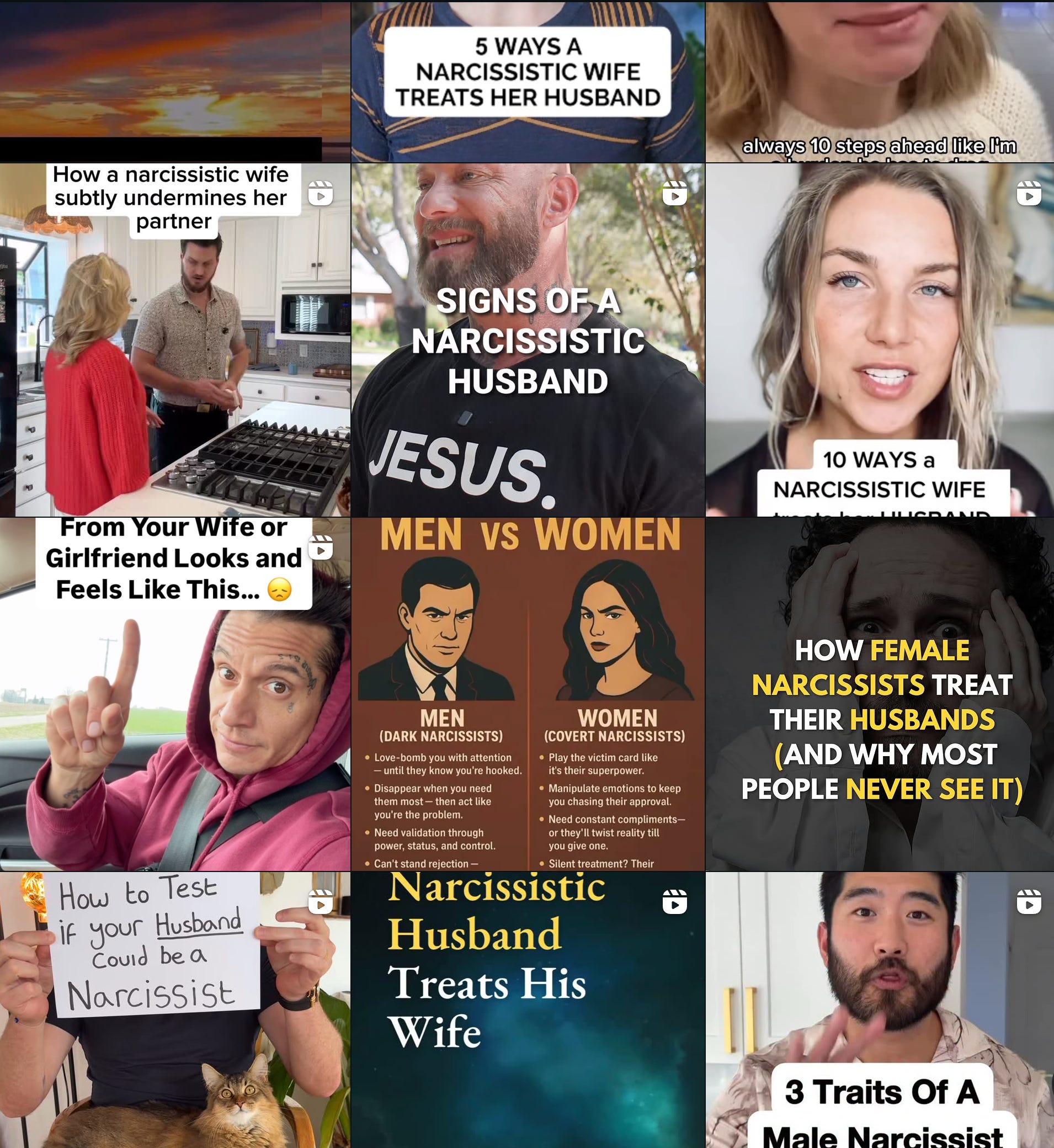
Spend ten minutes on TikTok or Instagram and you’ll encounter an endless stream of content about narcissistic red flags, narcissistic manipulation tactics, and how to heal from narcissistic relationships. There are accounts with millions of followers dedicated entirely to this topic. The comments are full of people having revelations: “Oh my god, this is my ex exactly.” “This explains everything.” “I finally have a word for what happened to me.”
The word is doing a lot of work. Too much work, if we’re being completely honest.
Here’s what narcissism actually means clinically:
A pervasive pattern of grandiosity, need for admiration, and lack of empathy, beginning in early adulthood. It’s characterized by things like an exaggerated sense of self-importance, preoccupation with fantasies of unlimited success, belief that one is special and unique, a sense of entitlement, interpersonally exploitative behavior, and arrogance.
Here’s what narcissism has come to mean colloquially: anyone who hurt you, disappointed you, prioritized themselves, or failed to meet your needs in a relationship.
These are not the same thing. Not even close.

☆
The diagnostic creep happened gradually, then all at once.
It started with genuine awareness-raising when people who had actually experienced relationships with personality-disordered individuals started sharing their stories, and those stories resonated. The patterns were recognizable—love bombing, devaluation, discard, hoovering1. For people who’d lived through this cycle, having language for it was genuinely healing. Finally, someone was describing what had happened to them.
But then the language escaped containment and the specific patterns of actual narcissistic abuse got diluted into general relationship disappointment. “Love bombing” started meaning anyone who was enthusiastic early in a relationship (aka dating). “Gaslighting” started meaning any disagreement about what happened. “Narcissist” started meaning anyone who wasn’t sufficiently attentive, who had their own needs, or who eventually left.
The terminology spread because it’s useful. Not clinically useful, but emotionally useful. Calling your ex a narcissist does several things at once: it explains why the relationship failed (their pathology, not your incompatibility), it positions you as a victim rather than a participant, and it makes the breakup feel meaningful rather than just sad. You didn’t just get dumped, you escaped abuse. You’re a survivor.
☆
I do understand the appeal. Breakups are painful, and the pain wants a story. “We weren’t right for each other” is unsatisfying. “He was emotionally unavailable” is closer but still feels incomplete. “He’s a narcissist who love-bombed me and then devalued me as part of a predictable abuse cycle” is a narrative. It not only has a shape, it also has a villain. It explains everything and exonerates you completely.