



Conscious Creation is an eight-week guided tracking program. Every week, you get an essay that teaches you how to read your data differently, how to see correlations, identify systems, and recognize patterns you couldn’t see while living them. Plus prompts that help you use the data strategically, and frameworks for making course corrections based on what your data reveals about you.
The story behind the program, and how it works:


Welcome to Week 1 of Conscious Creation!
You’re here. You committed. Now it’s time to build the foundation.
Week 1 isn’t about insights or breakthroughs (yet), it’s about establishing the practice of daily tracking so it becomes automatic. By Sunday, you’ll have seven days of data and a rhythm that starts to feel sustainable.
Before you start —
Make sure you’ve built your tracker and figured out what to track. If you haven’t done those yet, start there. This post assumes you’re ready to go.

What’s in today’s post —
The basics (behaviors, time, trackers as living documents)
Power features (consolidation, wearables, calculations)
Advanced context (why I track more, accountability, real-world applications)
Week 1 tools (daily guidance, reflection, checklist)
Join the chat (share small wins, engage with other Conscious Creators)
A note on when to expect Conscious Creation materials and emails: I like to send the weekly posts out on Monday mornings (PST). This allows you to collect data throughout the week (the “easy” part), then use the weekend to sit with it, reflect with the prompts, and make any adjustments needed, before starting a fresh week on Monday.

Behaviors build habits.
I know a lot of people call it “habit tracking”, but when you first start, you’re not really tracking habits, you’re actually tracking behaviors—the small daily choices that, over time, reveal your habits.
A habit is a pattern, and you can’t see a pattern from just one data point. But you can see it from 30, 60, 90 data points stacked together. The behaviors are the raw material. The habits emerge from the data.
So don’t worry about whether something is a “habit” yet. Just track the behavior. Did you do it or not? How much? The patterns will show themselves.
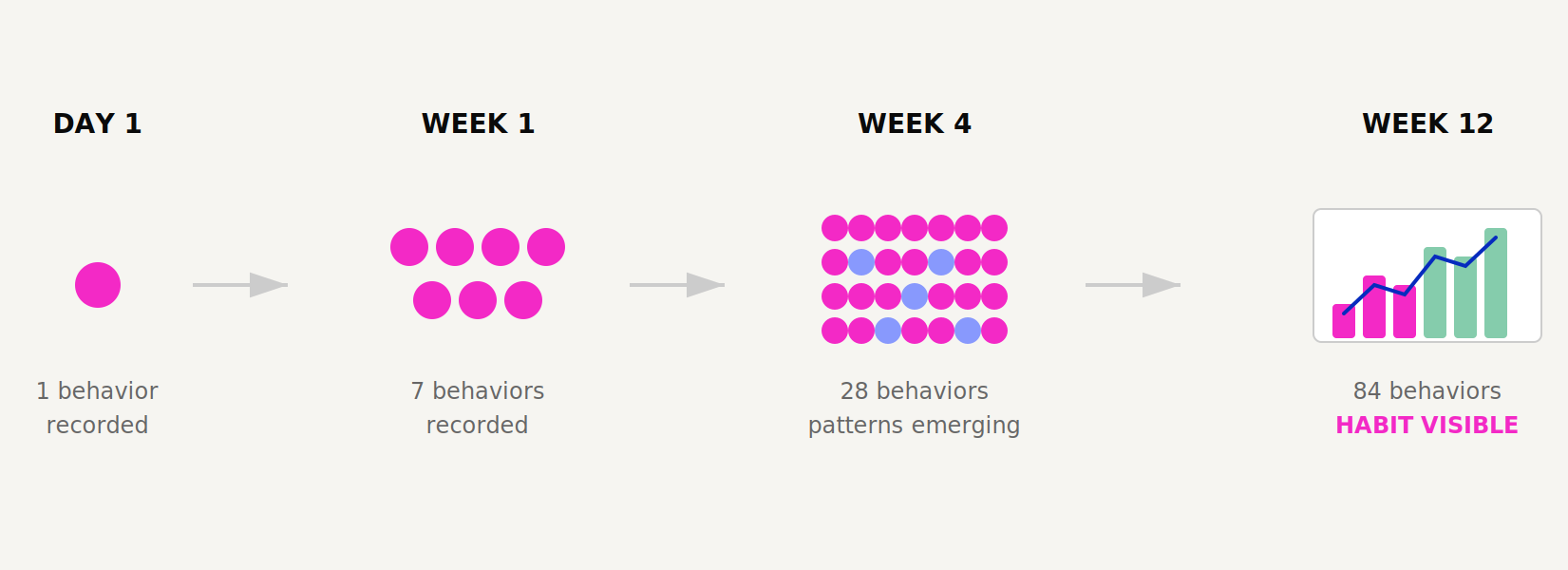
How long this actually takes.
Daily tracking: as little as 90 seconds.
Once your tracker is set up, you’re just checking boxes and entering numbers. That’s it.
But Week 1 takes longer than future weeks because you’re building your foundation and learning the system.
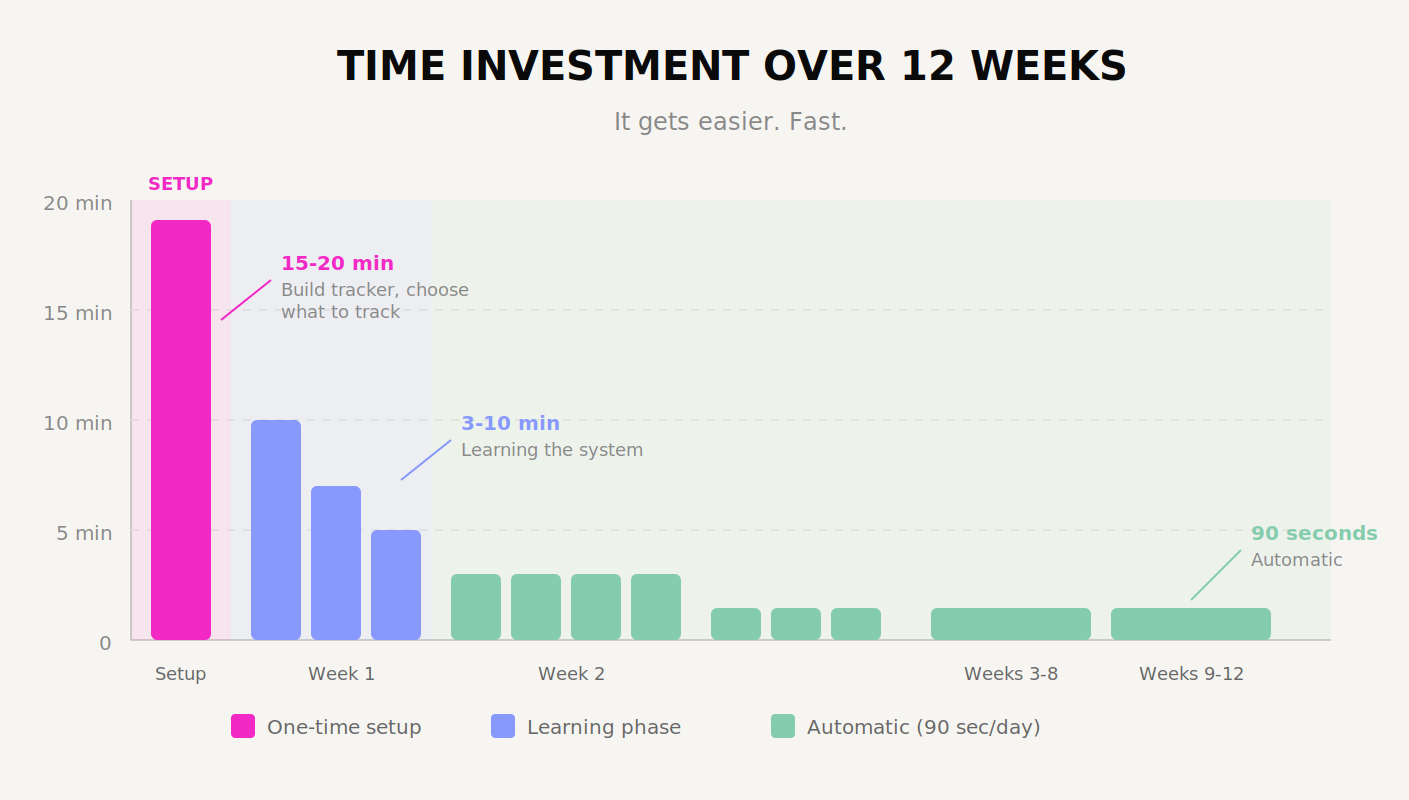
This is my Week 1 time investment. Yours may vary depending on how many things you’re tracking and how familiar you are with your tool.
By Day 4 or 5, you’ll have a rhythm. By Week 2, it’s becoming semi-automatic. By Week 4, you’re feeling dialed in.
The weekly reflection takes longer—maybe 15-20 minutes if you engage with the deeper prompts. They’re optional but recommended. But the daily tracking itself should really only take about 90 seconds before bed (or whenever you decide to do it)*
If it’s taking longer, simplify.
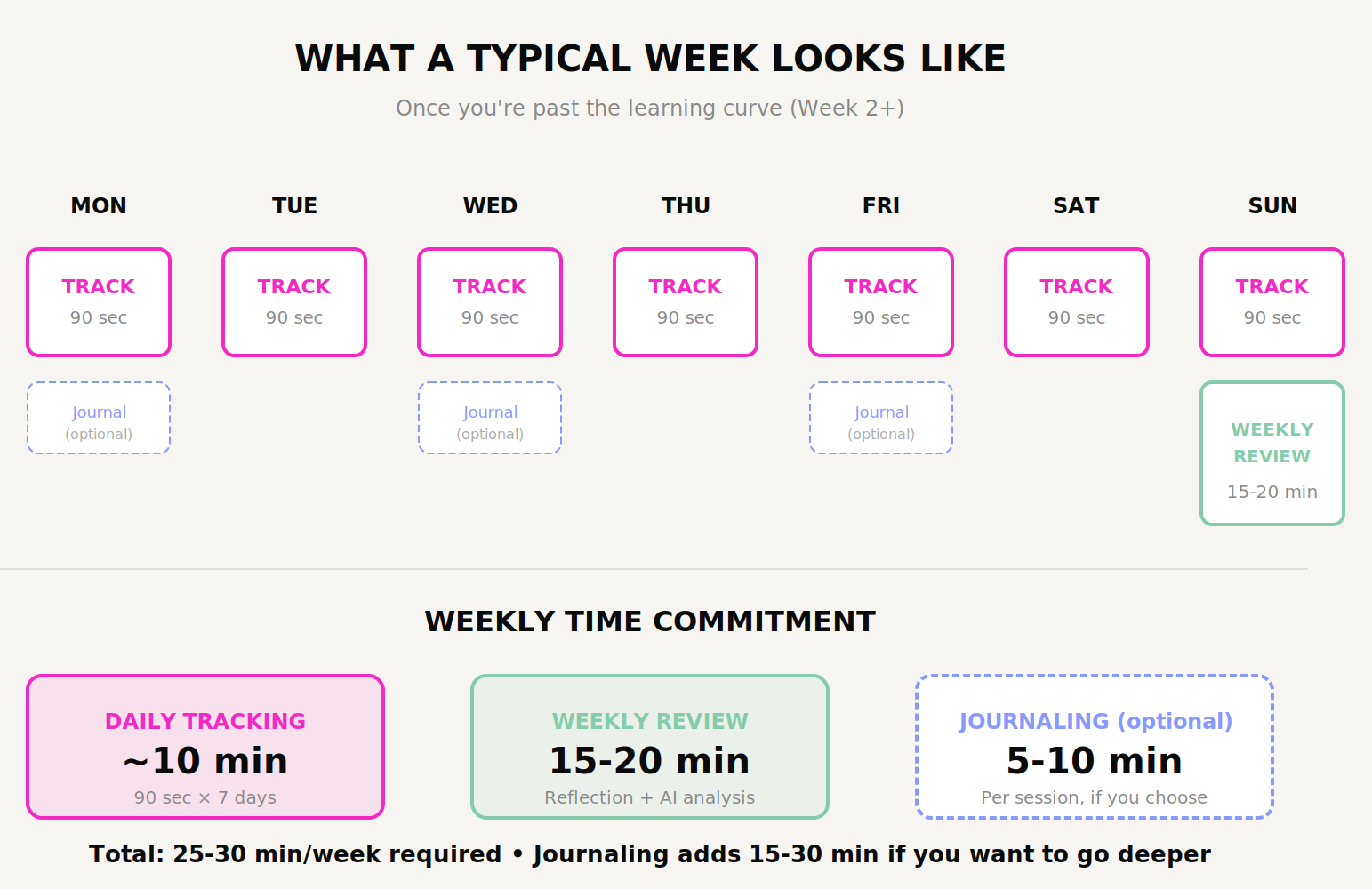
*Quick note on when you do it: I personally open my tracker a few times throughout the day. I have a tab open in my Notion workspace and if I remember I just “did a thing,” I’ll open it, log the thing, and move on. But I do the bulk of my tracking after dinner or right before bed.
Your tracker is a living document.
You won’t know what you need until you’re doing it.