



Most people think identity is something they discover, like some buried artifact waiting to be excavated if they just do enough therapy or read enough self-help books or take enough personality tests. We’ve built an entire industry around this idea that there’s a real you hiding underneath all the conditioning and trauma and social expectations, and if you can just peel back enough layers, you’ll finally find the essential core of who you actually are. But the longer I live, the more I suspect this is a comforting fiction we tell ourselves to avoid confronting a much more uncomfortable truth, which is that identity doesn’t work like archaeology at all, rather it works like architecture. You aren’t what you are. You are what you choose.
We’ve confused consumption with identity in a way that would have been incomprehensible to previous generations. Your Spotify Wrapped feels like it’s revealing something profound about your soul, your Amazon cart seems to document your values, your aesthetic era, your carefully curated feed, the books stacked on your nightstand that you may or may not actually read. These feel significant because they require decisions, but they’re preferences, not choices. Preferences are cheap because they cost nothing but time and attention, which we’ve learned to spend as thoughtlessly as we spend money we don’t have. You can prefer anything. You can spend an entire afternoon organizing your taste into a more palatable format and feel like you’ve done something meaningful when really you’ve just rearranged the surface of your life without touching anything underneath.
A real choice costs something. It costs discomfort, which is why most of us avoid it. It requires trade-offs that feel like small deaths. It builds or destroys momentum in ways you won’t fully understand until years later when you’re trying to explain to someone how you ended up here. It either honors or betrays your self-respect, and you can feel the difference in your body even when you can’t articulate it in words. Most of us will do almost anything to avoid that kind of cost, which is why we’ve built an entire culture around the simulation of choice. We scroll through infinite options, we curate infinite possibilities, we keep every door open so we never have to walk through one and close the others behind us. We’ve mistaken having options for having agency, when really the opposite is true. The more options you keep open, the less power you actually have.


Sartre said we are our choices, which sounds clean and declarative until you sit with what it actually means. It means you can’t hide behind your intentions or your trauma or your circumstances. It means the life you’re living right now is the life you’ve chosen, even if you chose it passively, even if you chose it by not choosing, even if you spent the entire time telling yourself you had no other option when really you just couldn’t stomach the discomfort of claiming what you actually wanted. To choose is to collapse infinite possibility into one path, to kill all the other versions of yourself that could have existed, and we’d rather stay in the fantasy of infinite potential than step into the reality of finite existence, because at least in the fantasy we can still be anyone, do anything, or become whatever we want without having to sacrifice any of the alternatives.
I’ve been noticing lately how my life is actually built. It’s not by the big dramatic decisions I agonize over for weeks, but by the tiny unglamorous choices I make without even thinking about them. Whether I escalate a conflict because I’m feeling defensive or let it dissolve because I’ve learned that most arguments aren’t actually about what they’re supposedly about. Whether I scroll for an hour before bed or pick up a book, knowing full well that the scroll will make me feel worse and the book might make me feel something true. Whether I respond to impulse or pause long enough to let intention catch up. Whether I say no when I mean no or say yes and then spend the next week resenting the person I said yes to, as if they forced me into something I chose completely voluntarily.
These micro-choices feel inconsequential in the moment because each one costs almost nothing, but they’re shaping neural pathways, building habits, and creating the patterns that eventually calcify into personality traits that feel like they’ve always been there when really you constructed them one tiny decision at a time. William James wrote that human beings are bundles of habits, which means your identity is just the residue of your previous choices. You think you’re discovering yourself, excavating some essential core that was always there waiting to be found, but you’re actually constructing yourself, brick by brick, choice by choice, in moments so small you don’t even notice you’re doing it until one day you look up and realize you’ve built something you didn’t mean to build and now you’re living in it.
Your life is shaped less by what you pursue and more by what you tolerate. I’ve watched this happen in my own life and in everyone around me. Tolerating chaos eventually makes you chaotic because your nervous system adapts to instability as the baseline. Tolerating disrespect trains people to disrespect you because you’ve taught them that your boundaries are negotiable. Tolerating boredom creates a boring life because you’ve accepted that being unstimulated is just how things are now. Tolerating bad information makes you stupid because your brain is a pattern-recognition machine and if you feed it garbage, it will find patterns in garbage. Every boundary you fail to set is a choice about what you’re willing to accept into the ecosystem of your life, and ecosystems are fragile things that can’t sustain unlimited toxicity before they collapse entirely.
The concept of minimum effective dose comes from medicine and fitness, this idea that small exposures create major systemic effects—you don’t need a massive dose of a drug to see results, you need the smallest dose that produces the effect you’re looking for. Personal choices work the same way. Micro-doses of self-betrayal scale into entire identities. Every time you tolerate something that violates your values, you’re training yourself to believe your values don’t matter as much as keeping the peace or maintaining the relationship or avoiding the discomfort of conflict. Every time you say yes when you mean no, you’re teaching yourself that other people’s comfort matters more than your own integrity. You can do this for years without noticing because each individual instance feels manageable, like it’s not that big a deal, it feels like the kind of small compromise that reasonable people make all the time. Then one day you wake up and realize you’re living a life you never actually chose, and that you’ve been making compromises so incrementally that you didn’t notice you’d compromised yourself out of existence.
We’re experiencing a cultural crisis around agency right now that nobody wants to talk about directly because talking about it would require admitting we’ve participated in creating it. We were raised on algorithms deciding for us, institutions claiming to know better, self-esteem culture telling us we’re already perfect exactly as we are, political movements insisting identity is predetermined by categories we were born into, and therapy language that frames every flaw as trauma rather than choice.
The result is a generation of people who think identity is something that happens to them rather than something they build, who’ve been trained to see themselves as victims of forces beyond their control rather than agents capable of shaping their own lives.

And if you’re thinking, “yeah, but I can’t change some things just by choosing differently.” Yes you can.
Most of your limitations aren't real and you can *actually* just do things

There’s an old anecdote about how circus trainers used to keep elephants from escaping, and the first time I heard it, I felt like it cracked my entire worldview wide open. I’ve been hesitant to share it with you because it reeks of self-help hokiness, but it’s something I think about constantly in my own life. It’s helped me make decisions, push through doubt, and recognize when I’m staying stuck out of habit rather than necessity. So I figured, who cares if it’s hokey if it’s genuinely useful.
Benjamin Franklin kept a ledger where he tracked his progress on thirteen virtues he wanted to cultivate. Temperance, silence, order, resolution, frugality, industry, sincerity, justice, moderation, cleanliness, tranquility, chastity, and humility. He treated character as a project, something you chose and refined and measured against your own standards. Every day he’d mark whether he’d succeeded or failed at each virtue to create awareness around the gap between who he wanted to be and who he actually was. Contrast that with today, where we treat identity like a horoscope, something you receive rather than construct, something written in the stars or encoded in your DNA or determined by your trauma.
But what if you’re just whoever you’ve chosen to be through your accumulated decisions, and the reason you don’t feel like yourself is because you’ve been choosing by default instead of on purpose?
You can’t control your genetics. You can’t control your past or your upbringing or your luck or your environment. You can’t control what happened to you or how other people treated you or the circumstances you were born into. I’m not interested in pretending those things don’t matter or that everyone starts from the same place or that pure willpower can overcome structural disadvantage, but you can control what you pay attention to, which shapes what you think about, which shapes how you see the world. You can control what you practice, which shapes what you get good at, which shapes what becomes possible. You can control who you surround yourself with, which shapes what feels normal, which shapes what you aspire to. You can control what you stop consuming, which creates space for something else. You can control what you walk away from, which is often harder than what you move toward. You can control where you place your time, which is the only truly limited resource you have. You can control what you’re willing to sacrifice for, which reveals what you actually value underneath all the things you claim to value.
Viktor Frankl wrote about this from a concentration camp, which is the least sovereign condition imaginable. He had no control over his circumstances, no freedom in any traditional sense, no ability to determine what happened to his body or when he would eat or whether he would survive the next day. But he argued that even in the complete absence of external freedom, meaning is still a choice. You can choose how you interpret what’s happening to you, you can choose what you pay attention to in the midst of horror, you can choose what you let define you. If choice is possible in those conditions, then the rest of us have no excuse for pretending we’re powerless over our substantially less constrained circumstances.
I’m not trying to be glib about this. I know structural forces constrain what’s possible and I know privilege exists and shapes what choices are available to different people. But within whatever constraints you’re operating under, you still have more agency than you’re using. You’re still making choices every day about what you tolerate, what you practice, and what you pay attention to. And those choices are building who you’re becoming whether you acknowledge it or not.
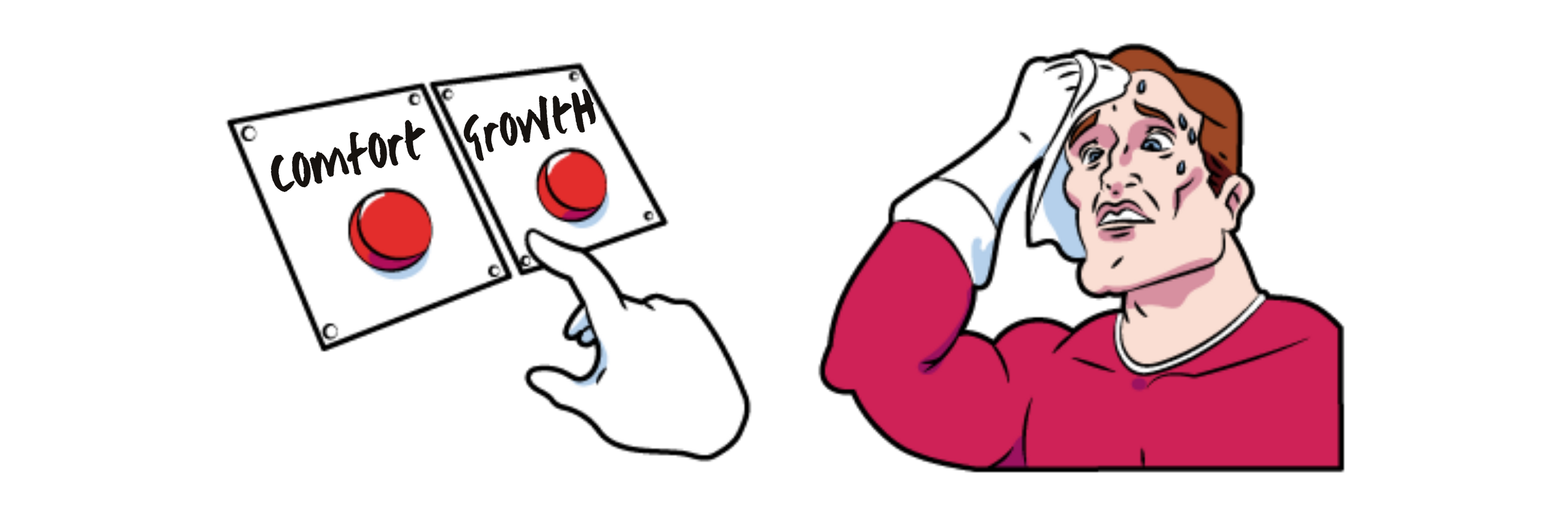
The hardest part about real choice is that it requires loss. Every time you choose one version of yourself, you’re exiling all the others. Choosing discipline means exiling comfort, which is why most people choose comfort and then wonder why they never build anything. Choosing honesty means exiling popularity, which is why most people choose to be liked over being truthful. Choosing ambition means exiling equilibrium, which is why most people choose stability over growth. Choosing boundaries means exiling easy approval, which is why most people choose to be accommodating and then resent everyone around them for taking advantage of their failure to say no.
Heraclitus said character is destiny, which I used to think was deterministic until I realized character isn’t something you’re born with. Character is built through choices that hurt, through moments where you have to decide between what’s easy and what’s right, between what feels good now and what you’ll respect yourself for later, between maintaining the comfortable lie and facing the uncomfortable truth. Once you choose, you have to live with it. You can’t blame your circumstances anymore. You can’t hide behind the fantasy of who you might have been if only things had been different. You have to own the life you’ve built through the accumulated weight of every choice you’ve made or failed to make.
Trying to be more deliberate in 2026?
Start here:




THE FIRST STEP is identifying what you’ve chosen accidentally. What habits, beliefs, relationships exist in your life simply because you never said no? What are you doing because you started doing it once and then kept doing it out of momentum rather than intention? Many people’s lives fall into this category. You’re executing patterns you established years ago without ever asking if they still serve you, if they ever served you, if they’re actually yours or just things you absorbed from your environment and never questioned.
THE SECOND STEP is subtracting before adding. Many people try to build a better life by adding things. More habits, more practices, more self-improvement projects that will finally transform them into whoever they think they should be. But by doing this, you’re never creating space for anything new. The real transformation happens when you start asking what you could stop doing. What can you remove from your life that is draining energy without giving anything back? One bad choice removed creates more change than ten good choices added to an already cluttered life, which is why most self-improvement fails. You can’t add new patterns on top of broken ones and expect the whole structure to suddenly become sound.
THE THIRD STEP is upgrading default decisions. Ninety percent of identity is built on autopilot, meaning you don’t actively choose most of what you do. You execute defaults that were set up so long ago you don’t even remember choosing them. If you want to change yourself, you have to change your defaults. You have to look at the automatic patterns and consciously reset them. Defaults feel like just who you are, when really they’re just what you’ve been doing for long enough that it feels natural. But natural isn’t the same as inevitable, and you can reset any default if you’re willing to tolerate the discomfort of conscious choice long enough for the new pattern to become automatic.
THE FOURTH STEP is choosing discomfort over passivity. If a choice feels scary but clean, it’s usually the right one. The choices that actually matter are the ones that cost you something in the moment. Comfort isn’t a reliable guide to what you should do because your nervous system is optimized for survival, not growth. It will tell you to stay where you are even when where you are is killing you slowly, because at least it’s a familiar kind of death. You have to override that signal. You have to choose the thing that scares you if you ever want to become someone different from who you are now.
THE FIFTH STEP is letting your choices embarrass your past self because that’s how you know you’re evolving rather than just aging. If you look back at who you were a year ago and feel total continuity, you haven’t grown, you’ve just gotten older. Growth means looking back and cringing a little at who you used to be, at the choices you used to make, at the things you used to tolerate that you wouldn’t tolerate now. It means your current self has different standards than your past self. The only way to get there is through choices that your past self would have been too afraid to make.
You are not what you post. You are not what you intend. You are not what you dream about becoming someday when the circumstances are finally right. You are what you choose, especially when no one is watching, especially when it’s inconvenient, especially when it costs you something you’d rather keep. Identity isn’t found, it’s forged—one choice at a time. The life you’re living right now is just the accumulated evidence of every choice you’ve made or failed to make. If you don’t like it, you know what to do. Stop waiting to discover who you are and start choosing who you want to become.

PS: If you enjoyed this post, I just published a follow up (1/22/26): You are what you choose, but only if you’re actually choosing ♡
As always, thanks for reading with me. If you enjoyed this post, please consider hitting the like button and/or sharing it to help boost its visibility. I appreciate you so much. xo
Sometimes I've described my life as "rearranging the furniture on the Titanic". Some of what you describe sounds like "maturity". I highly recommend aging. The older I get, the happier & more authentic I become. It really is about choices. My friends are I are experiencing letting go of being liked. No longer watering the dead plants in our lives. We have grown comfortable with the word "no". (No explanations required!) I've spent decades looking for myself outside myself. Of course she's always been here, on the inside. Duh! I love your words Stepfanie Tyler. So much wisdom, so young, plus the ability to find the right words -- to articulate. Thank you.
This resonates so deeply! I used to be so stuck in this cycle of "getting to know my purpose" hoping that breath work sessions, ayuhasca ceremonies, mediums, sound baths etc etc would give me "the" answer. Until I finally realized I just had to pick 'something', commit to it and actually do the thing :) It is still a challenge at times though.